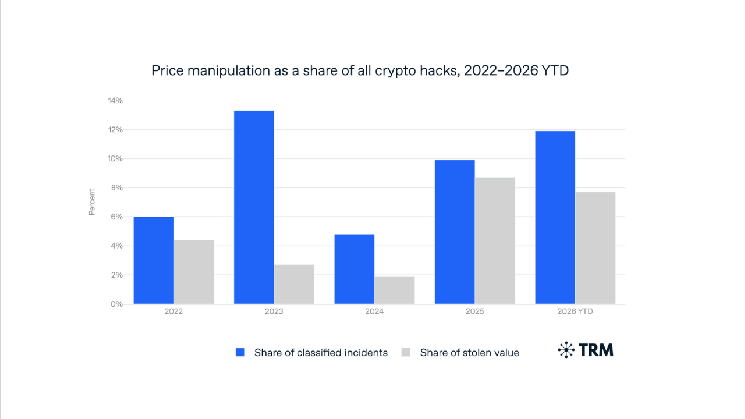
These attacks occur when an attacker artificially pumps the price of an illiquid crypto asset, then uses it as collateral to borrow other assets from a lending protocol. As the price of the collateral crashes immediately, the attacker simply walks away with the borrowed hard asset, abandoning their now-worthless collateral without needing to repay the debt.
Two Weak Links
Blockchain intelligence firm TRM Labs said they’ve registered 32 of this type of price-manipulation exploit so far in 2026, more than in any previous year. These numbers have been growing for the third year in a row, while last year, “only” 12 such cases were recorded. According to the researchers, price manipulation now accounts for about one in eight hacks, up…