
Public blockchains operate as permissionless networks where anyone can send digital assets to any address at any time. This open architecture creates a fundamental technical challenge for compliance teams tracking the flow of funds. Digital assets rarely travel in straight lines. They often move through multiple intermediate wallets before reaching a final destination. This multi-hop dynamic makes blockchain compliance fundamentally different from traditional banking, where every transfer requires prior institutional approval.
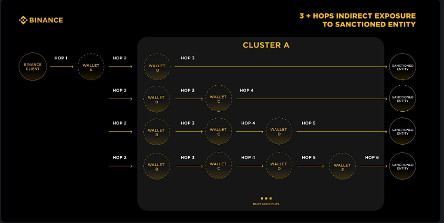
It’s important to look at this indirect exposure to understand how sanctions enforcement works in crypto. Recent media reports alleged that Binance processed $1.7 billion in…