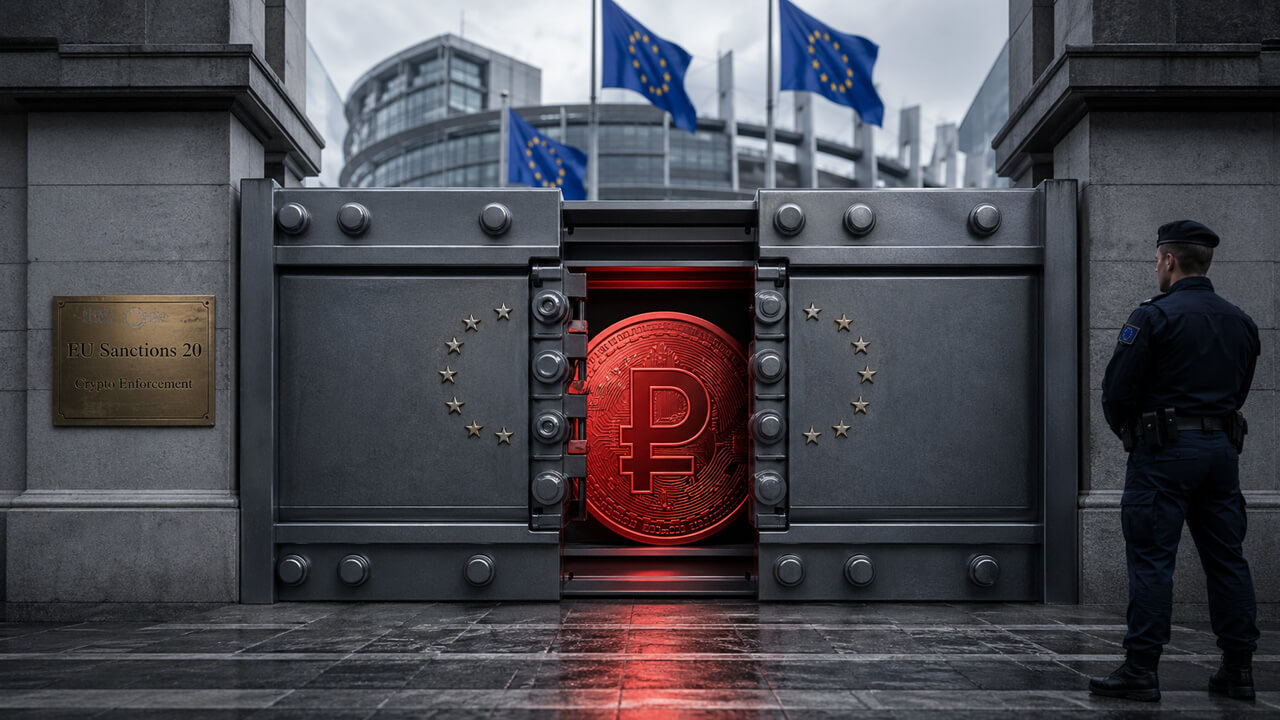


The European Union’s latest Russia sanctions package, its twentieth so far, brings crypto settlement squarely into an already fractured geopolitical spotlight.
Adopted on April 23, the package adds 120 new listings and rolls out financial measures that touch just about every corner of Russia’s crypto scene. That includes service providers, decentralized trading platforms, ruble-backed tokens, payment agents, and even support for the digital rouble.
Earlier rounds of restrictions mostly went after specific exchanges, wallets, or operators. This time, the EU is aiming higher up the stack, targeting the service layer that keeps Russia-linked crypto settlement running. That means third-country platforms…