Key Takeaways:
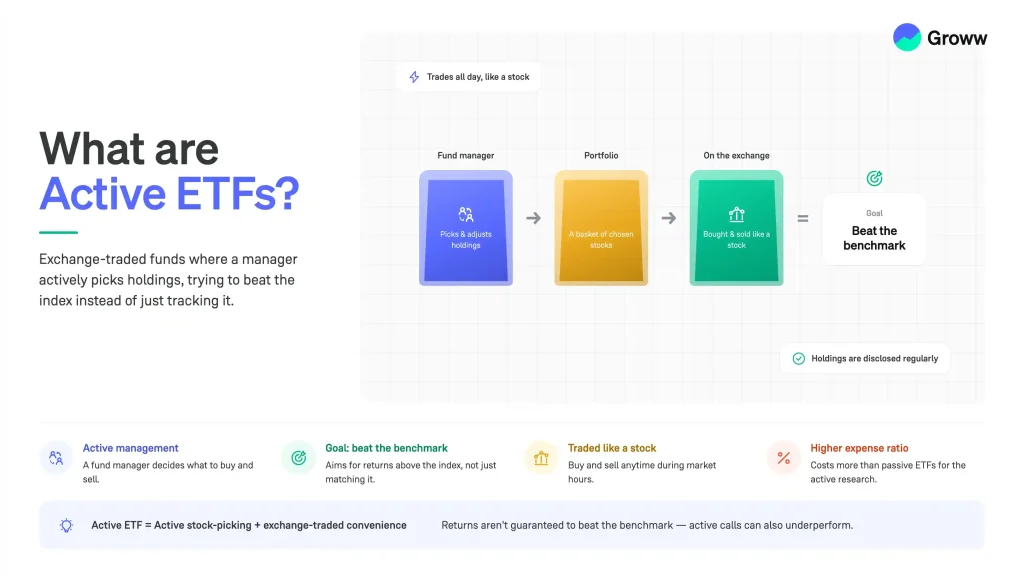
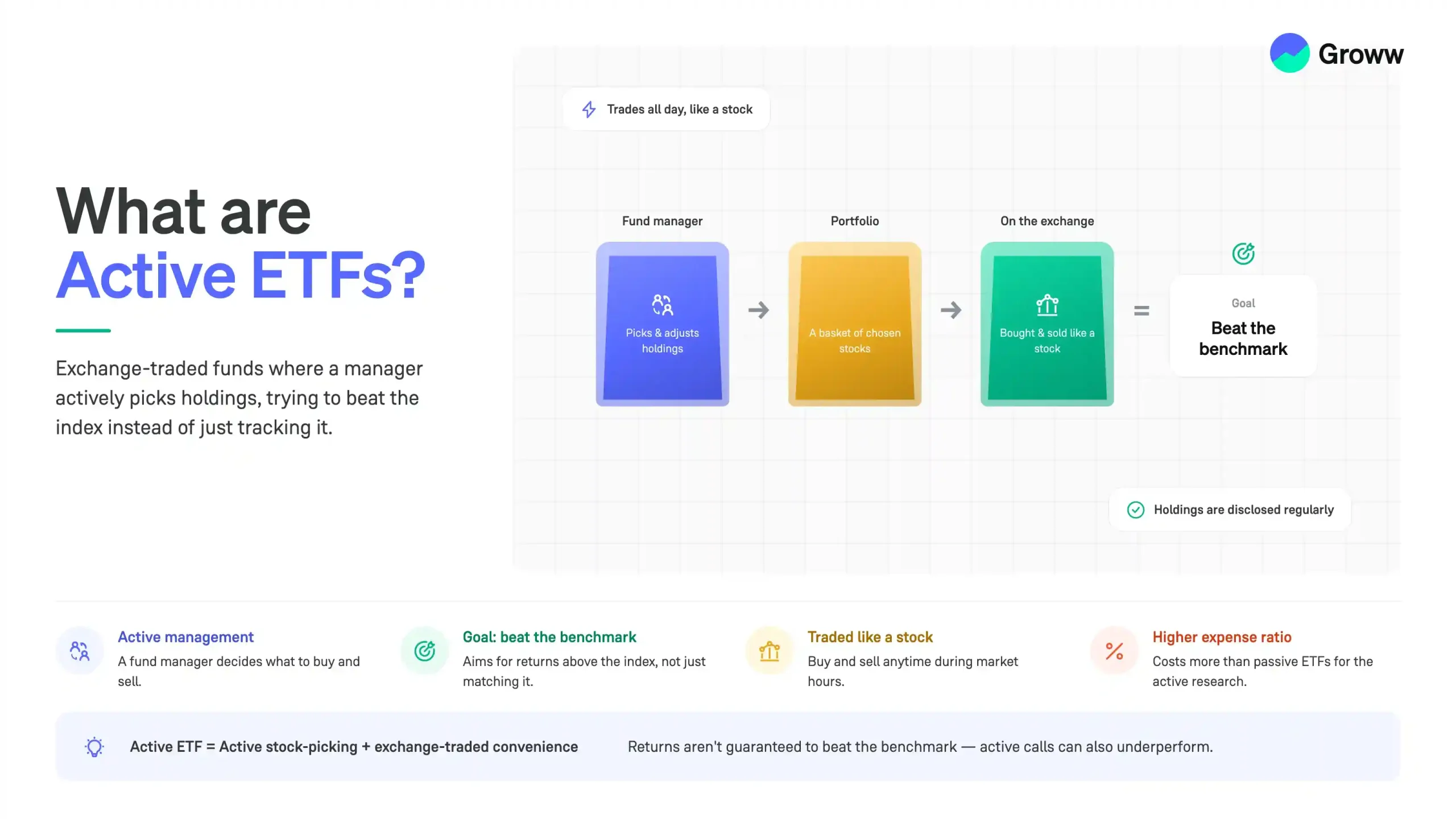
- Active ETFs tend to beat the benchmark while passive ETFs aim to replicate it.
- India’s ETF market is still overwhelmingly passive; true active ETFs remain rare on Indian exchanges as of mid-2026.
- Most “active” investing in India today happens through open-ended active mutual funds (flexi-cap, multi-cap, momentum funds, etc.), not through active ETFs.
- Active ETFs typically cost more than passive ETFs.
- There’s no guarantee active management will outperform the benchmark and generate alpha.
If you have been investing in ETFs, chances are you own a Nifty 50, Gold, Silver ETF, or similar ones. These are passive ETFs built to mirror a market index and provide inline returns, nothing more, nothing less. AUM (Assets…