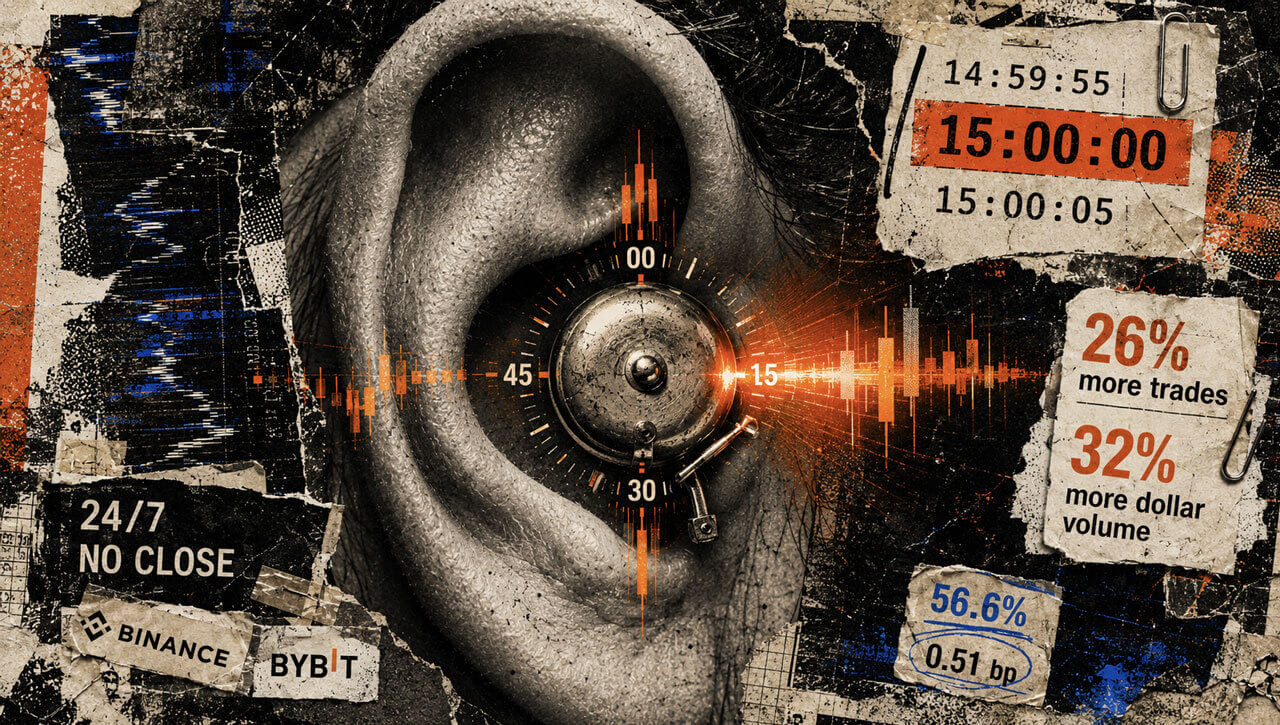
At 14:59:59 UTC, Bitcoin perpetual futures look like any other electronic market, with prices flickering and orders flowing from traders around the world.
But when the clock turns to 15:00:00, the market instantly becomes busier: more trades go through, more money turns over, and prices cover more ground during the next ten seconds, even though nothing has given anyone a fresh reason to trade.
The same pulse returns at 15, 30, and 45 minutes past every hour. A smaller version appears at five-minute boundaries and at the start of every minute, but the top of the hour still produces the strongest burst, as though crypto’s continuous market has been divided into thousands of tiny sessions by the software used to trade it.
Korean policy…